GP After Hours Subiaco
08 9382 9600

Why Do Asthma Symptoms Get Worse at Night?

Asthma symptoms can worsen at night due to allergens, cooler air, acid reflux and natural body rhythms. Learn common triggers, ways to manage night-time asthma, and when breathing difficulties need urgent medical care.
asthma worse at night

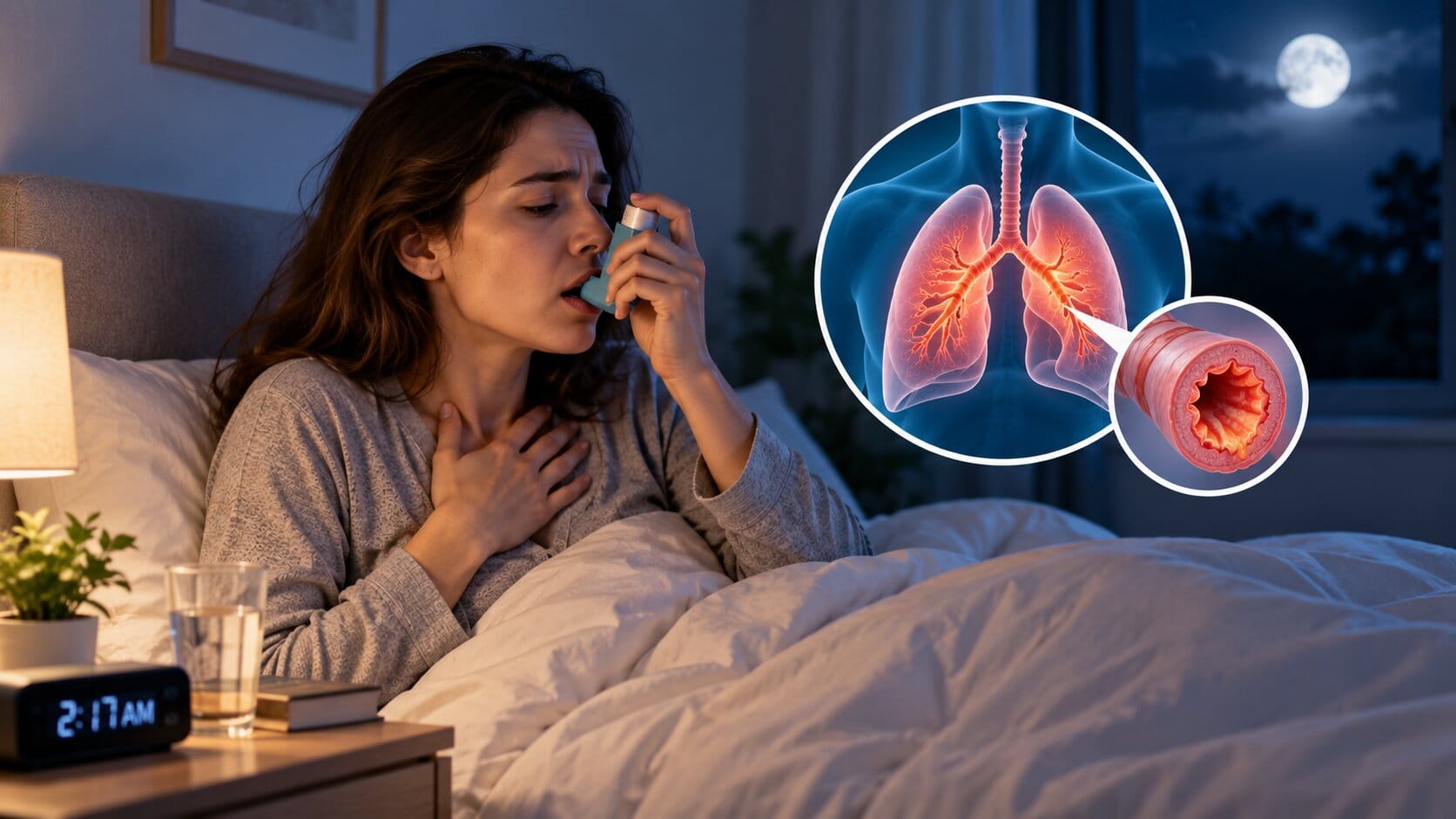
Asthma often gets worse at night because of a mix of factors, including your body’s natural hormone cycle, lying flat, cooler air, and increased allergen exposure in the bedroom. 

If you’ve noticed your asthma is worse at night, you’re not alone, as this is one of the most common patterns people with asthma report. This guide walks through common night-time asthma symptoms, what triggers them, and some symptoms that should not be ignored.

What Are the Signs of Night-Time Asthma?

Night-time asthma symptoms can be easy to miss until they start disrupting your sleep. The most obvious sign is breathing problems at night, especially a tight chest, wheeze, persistent cough, or a feeling of breathlessness. Other signs to watch for include:

  • Waking up gasping or short of breath in the early hours
  • A dry cough that worsens once you lie down
  • Chest tightness that eases when you sit upright
  • Needing your reliever inhaler more than once overnight
  • Feeling unusually tired or foggy the next morning, even after a full night in bed

If these signs are frequent, it’s a clue that your asthma isn’t as well controlled as it could be.

What Can Trigger Asthma Symptoms at Night?

There isn’t one single reason people notice their asthma worse at night, but a few common triggers stand out. 

Cold air is a common cause of breathing problems at night during the cooler months, as it can irritate sensitive airways. Common night-time triggers include:

  • Dust mites in bedding, pillows, mattresses, and carpet
  • Reflux, which can irritate the airways when lying flat
  • Pets sleeping in or near the bedroom
  • Cooler and drier air overnight, especially in winter
  • Delayed inflammation from allergens you were exposed to earlier in the day

Left unmanaged, some of these triggers can lead to asthma attacks at night that come on quickly and catch you off guard.

How Can You Manage Asthma Symptoms at Night?

Once you understand why your asthma flares up worse at night, it becomes easier to manage. Simple changes to your bedroom and bedtime routine can reduce breathing problems at night significantly. Try the following:

  • Wash bedding every week in hot water to reduce dust mites
  • Keep pets out of the bedroom, even if they usually sleep there
  • Use an air purifier or keep windows closed on high pollen nights
  • Take your preventer inhaler exactly as prescribed, even when you feel well
  • Prop yourself up with an extra pillow if reflux is a factor

Keeping a simple diary of your night-time asthma symptoms can help you and your doctor spot patterns and adjust your treatment plan.

What Should You Do If Asthma Symptoms Get Worse at Night?

If breathing problems at night are frequent, it’s worth having your asthma plan reviewed rather than just pushing through. Knowing the early signs helps you respond before asthma attacks at night become severe. Steps to take include:

  • Follow your written asthma action plan as soon as symptoms start
  • Use your reliever inhaler as directed, and note how quickly it helps
  • Sit upright rather than lying flat during an episode
  • Keep a phone nearby in case you need to call for help
  • Book a review with your regular GP if this is becoming a pattern rather than a one-off

Once your results have been received, please arrange a review with your regular GP or GP After Hours Subiaco.

When Is an Asthma Attack an Emergency?

Asthma attacks at night can escalate fast, which is why quick action matters more than waiting to see if it settles. 

Knowing when hospital care may be necessary can make the difference between a scary night and a genuine emergency. Call 000 or head to your nearest emergency department if you notice:

  • Your reliever inhaler isn’t helping after several puffs
  • Lips or fingertips turning blue or grey
  • Extreme difficulty speaking in full sentences
  • Ribs or neck visibly pulling in with each breath
  • Confusion, drowsiness, collapse or being very difficult to rouse

These signs mean the airways are struggling to get enough oxygen, and immediate medical care cannot wait until morning.

How Can You Reduce Asthma Symptoms at Night?

Preventive steps lower your risk of asthma attacks at night in the first place. A few habits make a real difference over time:

  • Stick to your preventer medication schedule, not just your reliever
  • Keep your bedroom cool, dry, tidy and free of clutter that collects dust
  • Treat reflux or allergies promptly rather than letting them linger
  • Get a yearly asthma review, even if things feel stable
  • Update your written action plan whenever your triggers or medications change

Asthma worse at night is common, but it’s manageable once you know your triggers and stick to your plan.

Bottom Line

Night-time asthma symptoms are common, but they’re not something to just live with. Understanding your triggers, sticking to your action plan, taking your medication as prescribed, and getting help early can keep your asthma settled and your nights undisturbed. If anything feels different or more severe than usual, get it checked properly rather than waiting it out.

Frequently Asked Questions

Yes, asthma can cause you to wake during the night with coughing, wheezing, chest tightness or difficulty breathing. In some cases, a person may wake suddenly feeling unable to get enough air. However, waking up gasping for air is not always caused by asthma and can also occur with conditions such as reflux, respiratory infections or sleep-related breathing disorders. If this happens repeatedly or the breathing difficulty is severe, medical assessment is recommended.


No. Occasional symptoms can occur, but regularly experiencing night-time asthma symptoms or waking because of coughing, wheezing or breathlessness can indicate that your asthma is not adequately controlled. Frequent night-time symptoms may mean your asthma management needs to be reviewed. Keep track of how often symptoms occur and discuss recurring symptoms with your doctor, particularly if your usual treatment is no longer providing adequate control.


Asthma can feel worse when lying down because changes in airway function during sleep can make the airways more sensitive. Being horizontal can also contribute to mucus accumulation, postnasal drip or acid reflux, all of which may irritate the airways. These factors can contribute to breathing problems at night, particularly in people whose asthma is already poorly controlled.

An after-hours doctor can assess non-life-threatening asthma symptoms that occur outside your regular GP’s opening hours. This may be appropriate if your symptoms are worsening, recurring at night or not being adequately controlled by your usual management plan. However, an after-hours consultation should not replace emergency treatment for a severe asthma attack. If breathing is severely restricted, symptoms are rapidly worsening or prescribed reliever treatment is not providing the expected relief, call 000.


Yes. Bedroom allergens such as dust mites, mould and pet dander can contribute to asthma symptoms at night. Dust mites in bedding, mattresses and carpets can be particularly relevant because exposure continues while you sleep. Reducing exposure to known allergens may help, but persistent symptoms should still be discussed with a healthcare professional to determine whether your asthma management needs review.


Yes. Cold, dry air can irritate sensitive airways and trigger coughing, wheezing, chest tightness or shortness of breath in some people with asthma. If your bedroom is particularly cold or you notice that symptoms consistently occur after exposure to cold air, this may be an important trigger to discuss with your doctor. Following your personal asthma action plan can also help you manage known triggers.

Share This Article

Contact & Location

Last appointments taken 30 minutes before close. Our friendly reception staff are available
to take bookings from 7am Weekdays, 8am Saturday and 9am Sunday/Public Holidays

We are not an emergency department. If you are experiencing chest pains, excessive bleeding or severe breathing difficulties
PLEASE DIAL 000 FOR AN AMBULANCE.

GENERAL EMERGENCY

  • Police - Fire - Ambulance
    000
  • Statement Emergency Service (SES) Assistance
    132 500
  • Poisons Information Centre
    13 11 26

HOSPITAL EMERGENCIES

Our Wellness Group

SportsMed Subiaco
Subiaco Women's Health
Subiaco Men's Health
Perth Concussion Centre
GP After Hours Subiaco
Thoracare Subiaco
© 2026 GP After Hours Subiaco
•
© GP After Hours Subiaco
Website by c4 Digital Agency