GP After Hours Subiaco
08 9382 9600

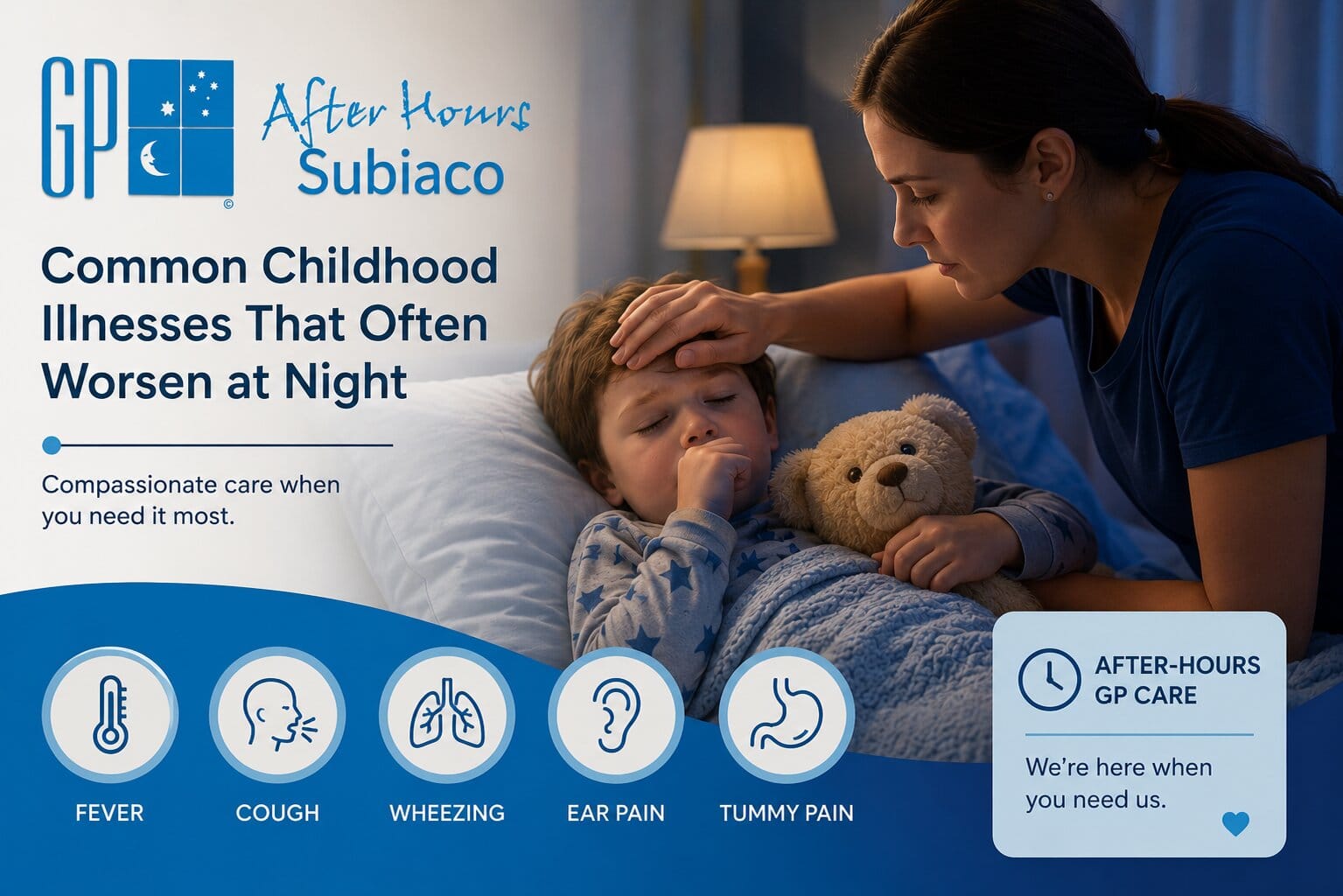
7 Common Childhood Illnesses That Often Worsen at Night

Learn about 7 common childhood illnesses that can worsen at night, including croup, asthma, ear infections, fever, gastroenteritis, eczema, and colds, plus when to seek medical care.
childhood illnesses that worsen at night

There are many childhood illnesses that genuinely do worsen after dark.

This is not just parental anxiety. At night, natural changes in hormones, body temperature, mucus drainage, and airway function can make symptoms feel worse than they do during the day. 

Biological, physiological, and environmental factors all contribute to symptoms peaking at night, making it harder to know whether your child is sick at night, needs urgent care, or can wait until morning.

Here are the seven most common childhood illnesses that worsen at night, along with clear guidance on when to seek help.

1. Croup

Croup is one of the most recognisable childhood illnesses that worsens at night. It causes a distinctive barking cough and a harsh, high-pitched sound when breathing in (known as stridor). 

Symptoms often seem mild during the day and then intensify significantly after midnight.

The inflammation of the voice box and airways that causes croup tends to respond to cool night air, so taking your child outside for a few minutes can provide some relief. 

However, if your child shows stridor at rest, is working hard to breathe, or their lips or fingernails look bluish, seek infant urgent care immediately.

2. Asthma

Asthma is one of the most common childhood illnesses that worsens at night due to natural dips in cortisol levels, increased exposure to allergens like dust mites in bedding, and changes in airway temperature. 

A child sick at night with asthma may wake coughing persistently, wheeze with every breath, or struggle to speak in full sentences. Signs that require urgent attention include:

  • Visibly fast breathing rate, with ribs showing through the skin.
  • An inhaler provides no relief after two to four puffs with a 30-second gap between each puff.
  • Skin around the nose and mouth appears pale or bluish in colour.
  • The child appeared panicked, unable to lie down flat, or too breathless to cry.

3. Ear Infections

Ear pain caused by a middle ear infection (otitis media) typically peaks at night because lying down changes the pressure in the ear canal, making fluid buildup more painful. Children may go to bed relatively comfortable and then wake screaming and pulling at their ears.

Most ear infections in children are viral and will resolve without antibiotics, but a GP assessment is important to rule out bacterial infection, particularly if the child has a fever above 38.5°C alongside the ear pain. A Perth kids clinic can assess this quickly without the wait of an emergency department.

4. Febrile Convulsions

Febrile convulsions are seizures triggered by a rapid rise in body temperature, and they are understandably terrifying for any parent to witness. 

While they are more common in children between six months and five years of age, they can happen at any time of day or night. A fever that was manageable at bedtime can rise sharply overnight.

If your child has a febrile convulsion that lasts longer than five minutes, has multiple seizures in one night, or does not return to normal within 30 minutes after the seizure ends, this is a situation for the emergency department, not an after-hours GP.

5. Gastroenteritis

Vomiting and diarrhoea tend to be more disruptive at night simply because rest is interrupted. 

However, gastroenteritis becomes clinically concerning when a child is sick at night and shows signs of dehydration. 

In infants and young children, dehydration can develop quickly. Watch for these specific signs of dehydration in children:

  • No wet nappy in the last six to eight hours for infants.
  • Dry mouth, cracked lips, and no tears when crying.
  • Sunken soft spot (fontanelle) on the top of a baby’s head.
  • Extreme lethargy or uncharacteristic drowsiness that is hard to reverse.

These warrant a visit to an infant urgent care or a Perth kids clinic that operates after hours.

6. Eczema Flare-Ups

Eczema is one of the childhood illnesses that worsens at night because body temperature rises naturally during sleep, increasing skin itchiness. 

The skin barrier is also drier at night, and contact with bedding fibres can further irritate inflamed skin. Children with eczema often scratch in their sleep, which can break the skin and lead to secondary infections.

While eczema itself is not an emergency, a severe flare causing weeping, crusting, or infected patches needs a GP assessment. A doctor can prescribe appropriate topical treatments and identify whether an infection has set in

7. Colds and Upper Respiratory Infections

A standard cold tends to worsen at night for several well-established reasons. 

Mucus accumulates when lying flat, nasal congestion worsens without gravity, and the natural dip in body temperature overnight can exacerbate already irritated airways. Children may sleep lightly, wake frequently, and find it hard to breathe through the nose.

These same factors can also make symptoms of other respiratory illnesses, such as influenza (flu), bronchiolitis, whooping cough, sinusitis, and even allergies, feel more noticeable after dark. While the causes differ, increased congestion, coughing, and airway irritation often become more troublesome overnight.

Most colds do not need a GP visit. However, see a doctor if your child has a high fever, has been unwell for more than 10 days without improvement, develops a secondary ear or chest infection, shows symptoms of bronchiolitis or whooping cough, or is under three months of age and unwell.

How Can GP After Hours Subiaco Help When Your Child Is Sick at Night?

When your child is sick at night, and your regular clinic is closed, GP After Hours Subiaco provides access to experienced GPs who can assess your child’s condition. 

Our clinic is located inside SJOG Subiaco Hospital at 175 Cambridge Street, Subiaco, and is open evenings on weekdays and throughout the day on weekends and public holidays.

The GPs at GP After Hours Subiaco can examine ears, listen to the chest, check oxygen levels, assess hydration status, and prescribe medication where needed. 

On-site radiology and pathology access means investigations can be arranged the same evening if required. All consultation notes are faxed directly to your child’s regular GP, so there is no gap in their ongoing care.

Appointments can be booked online at any time via their website, by phone on 08 9382 9600, or as a walk-in. Payment is required on the day, with Medicare rebates claimable at the time of service.

Frequently Asked Questions

Paracetamol formulated for children is generally safe from one month of age, and ibuprofen from three months. Always check the dosing instructions on the packaging and dose according to your child’s weight, not age. Never give aspirin to children under 16.

If your child has a fever, it is reasonable to check on them every couple of hours without necessarily waking them fully. However, if they have had a febrile convulsion previously, or if you are concerned about their breathing or responsiveness, it is safer to check more frequently.

Cool mist humidifiers can help moisten dry air and ease breathing for some children, particularly in Perth’s dry climate. Avoid steam humidifiers as these carry burn risks. Ensure the humidifier is cleaned regularly to prevent mould build-up.

Age-appropriate paracetamol or ibuprofen can help manage ear pain temporarily. A warm cloth held gently against the ear may also provide comfort. These measures manage symptoms only and do not treat the underlying cause, so a GP review is still recommended.

A normal resting breathing rate for children varies by age. Infants under 12 months breathe 30 to 60 times per minute. Children aged one to five breathe 20 to 40 times per minute. Children aged six to 12 breathe 15 to 30 times per minute. Breathing rates consistently higher than these, especially with visible effort, warrant medical assessment.

Share This Article

Contact & Location

Last appointments taken 30 minutes before close. Our friendly reception staff are available
to take bookings from 7am Weekdays, 8am Saturday and 9am Sunday/Public Holidays

We are not an emergency department. If you are experiencing chest pains, excessive bleeding or severe breathing difficulties
PLEASE DIAL 000 FOR AN AMBULANCE.

GENERAL EMERGENCY

  • Police - Fire - Ambulance
    000
  • Statement Emergency Service (SES) Assistance
    132 500
  • Poisons Information Centre
    13 11 26

HOSPITAL EMERGENCIES

Our Wellness Group

SportsMed Subiaco
Subiaco Women's Health
Subiaco Men's Health
Perth Concussion Centre
GP After Hours Subiaco
Thoracare Subiaco
© 2026 GP After Hours Subiaco
•
© GP After Hours Subiaco
Website by c4 Digital Agency