GP After Hours Subiaco
08 9382 9600

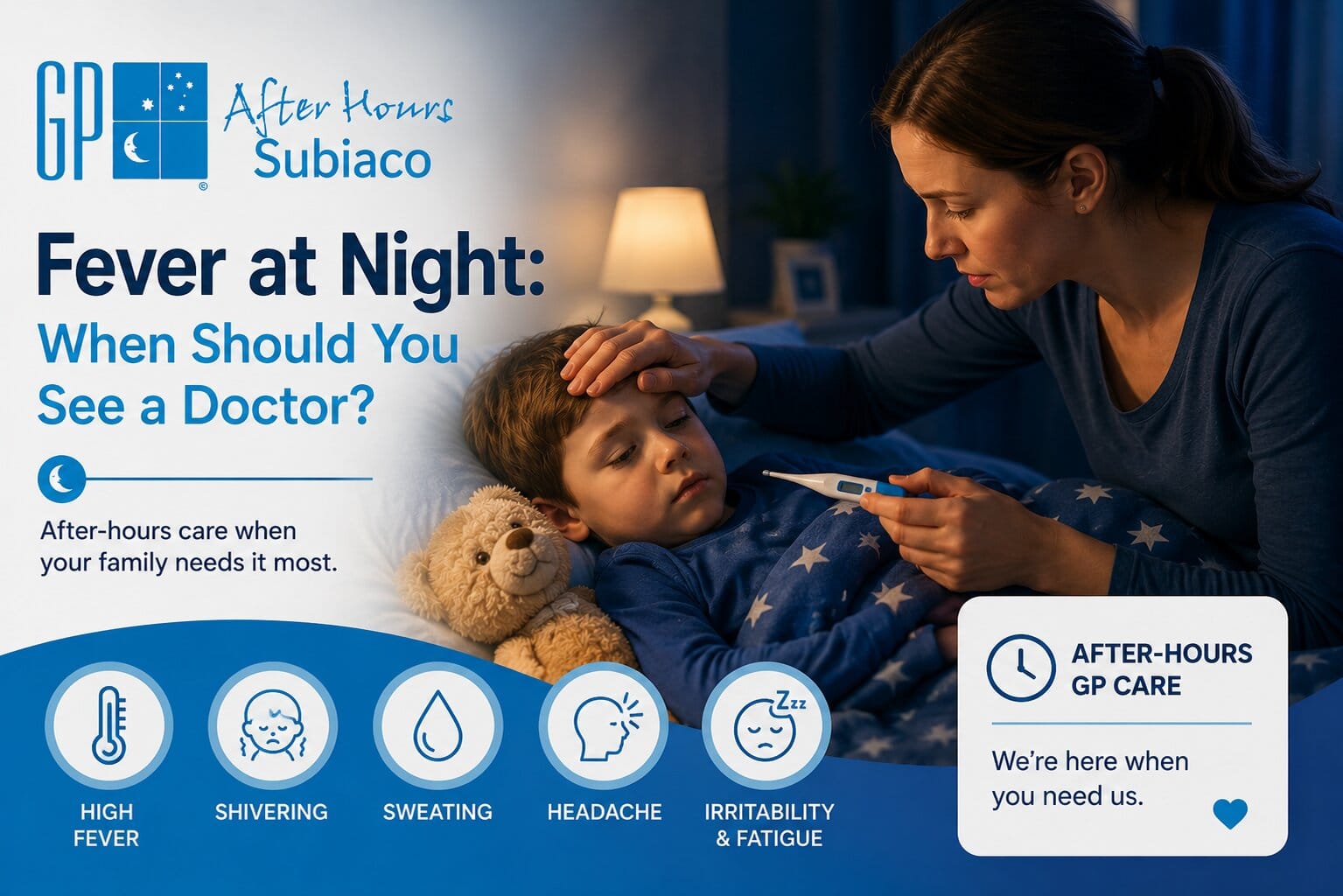
Fever at Night: When Should You See a Doctor?

Fever at night can often be managed at home, but high or persistent fever and worrying symptoms may require an after-hours GP or urgent medical care.
fever at night

If a fever at night is very high, isn’t improving with medication, is accompanied by worrying symptoms, or affects someone at higher risk, it’s important to see a doctor without waiting until morning. 

For most healthy adults with a mild to moderate fever, careful home care overnight is often enough.

The challenge is that fevers rarely arrive at a convenient time. They often seem to worsen just as clinics close, leaving you wondering whether to monitor the symptoms, book an after-hours GP, or head straight to the emergency department. 

While most fevers are the body’s natural response to fighting an infection, some can signal a condition that needs prompt medical attention. 

Understanding the difference can give you peace of mind, help you get the right care sooner, and prevent a long, anxious night of second-guessing your next step. 

Why Does A Fever Spike at Night?

A fever is a body temperature above 38°C. It is a normal immune response to infection, not an illness in itself. The body raises its temperature to create an environment that is less hospitable to viruses and bacteria.

Fever at night tends to feel worse for several well-established reasons. 

Cortisol, a hormone that acts as a natural anti-inflammatory, reaches its lowest levels in the evening and overnight. 

This hormonal dip allows the immune response, including fever, to intensify. Lying flat also slows lymphatic drainage and can concentrate inflammatory processes. 

The result is that a temperature that was manageable at 6 pm can feel significantly more severe by midnight.

What Commonly Causes a Fever at Night?

A fever is a symptom of an underlying illness or infection. In most cases, the cause is mild and resolves with rest and appropriate treatment, but some conditions require prompt medical assessment. Common causes of fever at night include:

  • Viral infections, such as the common cold, influenza (flu), COVID-19, and other respiratory viruses.
  • Bacterial infections, including urinary tract infections (UTIs), chest infections, ear infections, sinus infections, and tonsillitis.
  • Gastrointestinal infections, which may also cause vomiting, diarrhoea, and abdominal pain.
  • Skin and soft tissue infections, such as infected cuts, cellulitis, or abscesses.
  • Inflammatory or autoimmune conditions, which can occasionally trigger recurrent fevers.
  • Less commonly, certain medications, heat-related illness, or more serious medical conditions may also cause a persistent or unexplained fever.

The accompanying symptoms often provide the biggest clue to the underlying cause. 

For example, a sore throat may point to tonsillitis, burning when passing urine may indicate a UTI, while a persistent cough with chest pain or shortness of breath may suggest a chest infection. 

If the cause is unclear, the fever persists for more than three days, or your symptoms worsen, seek medical assessment rather than continuing to manage it at home.

What Are The Fever Symptoms at Night?

Fever symptoms at night can vary depending on the underlying cause and the individual’s age and general health. Common symptoms include:

  • Chills and shivering as the body works to raise its core temperature.
  • Sweating heavily as the body begins to cool itself once the fever peaks.
  • Headache and muscle aches caused by the release of inflammatory chemicals.
  • Fatigue and general lethargy make sleeping difficult despite exhaustion.
  • Increased heart rate and rapid breathing as the body works harder.

Fever at Night in Adults: Home Management vs Seeking Care

SituationHome CareAfter-Hours GPEmergency Department
Mild fever (38°C–39.5°C) that responds to paracetamol or ibuprofen and is improving✓
Fever over 39.5°C that does not improve after two doses of paracetamol or ibuprofen✓
Fever lasting more than 3 days without improvement or a clear cause✓
Fever with symptoms of a urinary tract infection, chest infection, or worsening cough✓
Fever with persistent vomiting or signs of mild dehydration✓
Fever with a stiff neck, severe headache, or confusion✓
Fever with difficulty breathing, chest pain, or loss of consciousness✓
Fever after a serious injury, or accompanied by seizures✓

For most healthy adults, a fever at night between 38°C and 39.5°C can be managed at home with the following measures:

  • Take paracetamol or ibuprofen at the correct dose and interval to lower the temperature and improve comfort.
  • Drink water, diluted electrolyte drinks, or clear broths consistently to prevent dehydration.
  • Keep bedding light and wear loose clothing to avoid overheating.
  • Rest and avoid strenuous activity until the fever has resolved for at least 24 hours.

Fever at night in adults becomes a reason to seek care when it exceeds 39.5°C and does not respond to two doses of paracetamol, when it has persisted for more than three days without a clear diagnosis, or when it appears alongside symptoms that suggest a serious underlying cause.

When Fever Symptoms at Night Require Urgent Attention?

Certain combinations of fever symptoms at night are warning signs that require prompt medical review rather than home management. Go to the emergency department immediately if fever is accompanied by:

  • A stiff neck and sensitivity to light can indicate meningitis.
  • A non-blanching rash, meaning a rash that does not fade when pressed with a glass.
  • Severe difficulty breathing or rapid breathing at rest.
  • Confusion, disorientation, or difficulty staying awake.
  • Severe abdominal pain, particularly on one side.
  • Signs of severe dehydration include very dark urine, dry mouth, and no urination for eight hours.

For fever in infants under three months of age, any temperature above 38°C requires immediate medical attention, regardless of other symptoms. 

This age group does not respond to infection in the same way as older children and adults, and deterioration can be rapid.

What Are The High-Risk Groups That Should Always Seek Assessment?

Some people cannot rely on home management alone for a fever at night. The following groups should seek medical review for any fever above 38°C rather than waiting to see how it develops:

  • Infants under three months of age.
  • Adults over 65, particularly those with existing heart, lung, or kidney conditions.
  • Pregnant women, as fever can affect the developing baby.
  • People receiving chemotherapy or immunosuppressive medication.
  • Individuals with diabetes, as infections can escalate quickly, and blood sugar control is harder when unwell.

Fever Treatment in Perth: How Can GP After Hours Subiaco Help?

GP After Hours Subiaco provides a practical middle ground for a fever at night that is causing genuine concern, but does not require a hospital emergency department. 

Located inside SJOG Subiaco Hospital at 175 Cambridge Street, our trained GPs are available Monday to Friday from 7 pm to 10 pm, Saturday from 1 pm to 7 pm, and Sunday and public holidays from 9 am to 7 pm. 

Rather than waiting anxiously until morning or spending hours in an emergency waiting room, you can see a doctor the same evening, get a clear assessment, and go home with appropriate treatment.

All consultation notes are faxed to your regular GP the following business day. This is particularly valuable for parents managing a feverish child or adults who are unwell alone and unsure whether symptoms are improving or worsening. 

Appointments can be booked online 24/7 or by calling 08 9382 9600, and walk-ins are also welcome.

Frequently Asked Questions

Yes, paracetamol and ibuprofen work through different mechanisms and can be taken together for a short period to manage a high fever that is not responding to one medication alone. 

Follow the recommended doses for each and do not exceed the stated 24-hour limits. If the fever is still not responding, seek medical advice rather than increasing the dose.

Not necessarily. 

The height of a fever does not always correlate with the severity of the underlying illness. Some viral infections cause a high fever that resolves quickly, while some serious bacterial infections can present with only a mild temperature. 

The accompanying symptoms and how the person appears overall are more useful guides than the number on the thermometer alone.

Ear thermometers and digital thermometers under the tongue or in the armpit are suitable for home use. Rectal temperature measurement is the most accurate method for infants under one year, but requires guidance on technique. Forehead strip thermometers are less reliable and can be underread by up to one degree.

For mild to moderate fever in healthy adults, it is generally safe to allow the fever to run its course if the person is comfortable and well hydrated. The immune benefit of an elevated temperature is real. However, if the fever is causing significant discomfort, making sleep impossible, or is above 39.5°C, treating it with medication is appropriate.

Yes, psychogenic or stress-induced fever is a recognised phenomenon, more common in some individuals than others. 

It tends to produce a persistent low-grade temperature of around 37.5°C to 38°C without other signs of infection. If a recurring low-grade fever has no identifiable cause, a GP can investigate further.

Share This Article

Contact & Location

Last appointments taken 30 minutes before close. Our friendly reception staff are available
to take bookings from 7am Weekdays, 8am Saturday and 9am Sunday/Public Holidays

We are not an emergency department. If you are experiencing chest pains, excessive bleeding or severe breathing difficulties
PLEASE DIAL 000 FOR AN AMBULANCE.

GENERAL EMERGENCY

  • Police - Fire - Ambulance
    000
  • Statement Emergency Service (SES) Assistance
    132 500
  • Poisons Information Centre
    13 11 26

HOSPITAL EMERGENCIES

Our Wellness Group

SportsMed Subiaco
Subiaco Women's Health
Subiaco Men's Health
Perth Concussion Centre
GP After Hours Subiaco
Thoracare Subiaco
© 2026 GP After Hours Subiaco
•
© GP After Hours Subiaco
Website by c4 Digital Agency