GP After Hours Subiaco
08 9382 9600

UTI Symptoms: When Should You Seek Same-Day Treatment?

Learn the key UTI symptoms, when same-day treatment is needed, and when to see an after-hours GP to prevent complications and manage symptoms promptly.
UTI Symptoms

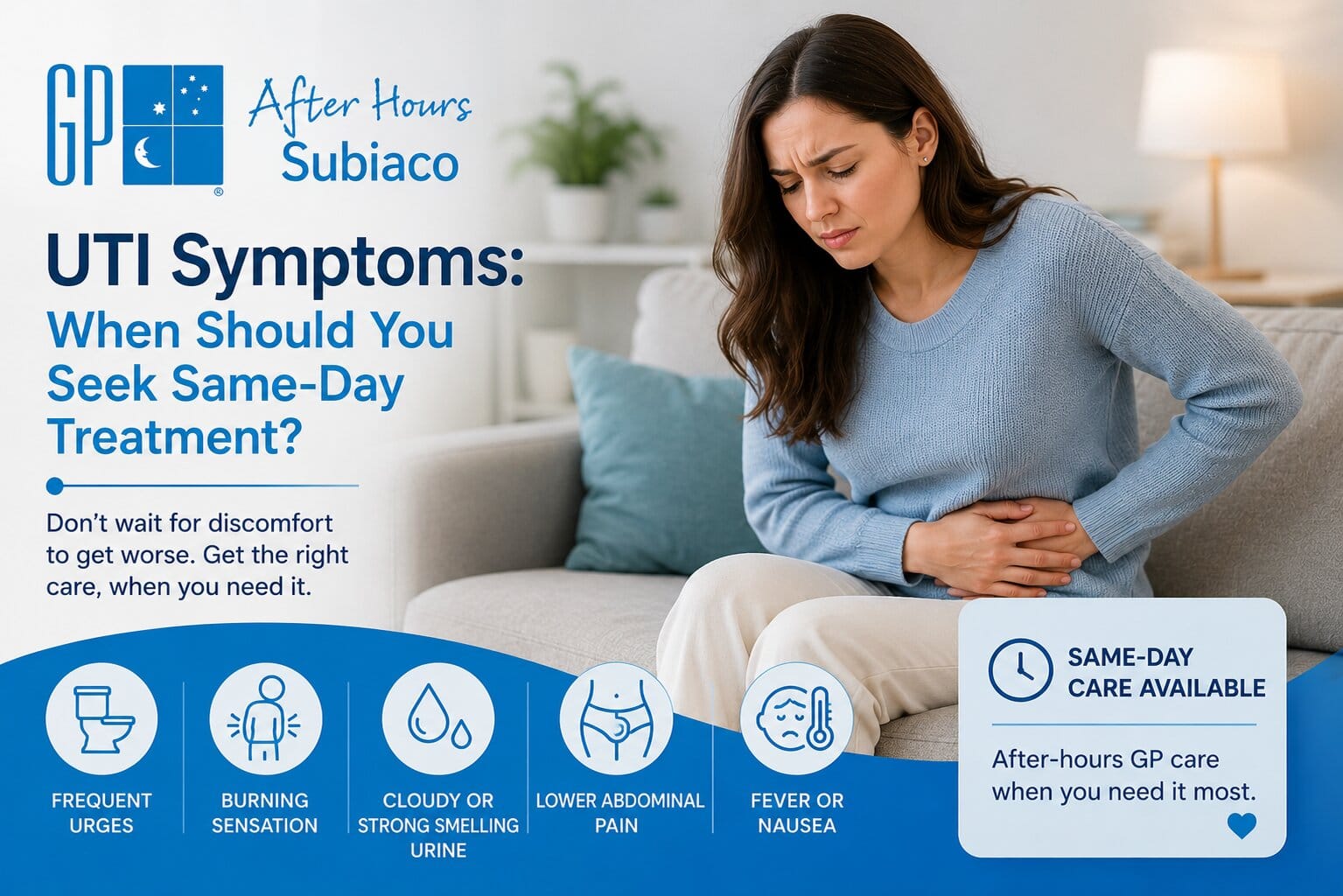
Burning when you urinate, frequent trips to the bathroom, lower abdominal pain, or cloudy urine are common signs of a urinary tract infection (UTI) that should be assessed by a doctor the same day. 

Most UTIs are straightforward to treat when diagnosed early, but knowing whether your symptoms can wait until your regular GP opens isn’t always easy. 

Today, we explain the common signs of a UTI, when home care isn’t enough, and when it’s time to see an after-hours GP. 

What Are UTI Symptoms?

A urinary tract infection (UTI) occurs when bacteria, most commonly Escherichia coli from the bowel, enter the urethra and multiply in the bladder. Symptoms can develop within hours and range from mild discomfort to signs of a more serious infection.

SymptomCommon UTI SymptomAfter-Hours GPEmergency Department
Burning or stinging when passing urine✓✓
Frequent urge to urinate, even when the bladder is nearly empty✓✓
Passing small amounts of urine more often than usual✓✓
Cloudy, dark, or strong-smelling urine✓✓
Pain or pressure in the lower abdomen✓✓
Blood in the urine✓✓
Fever, chills, or pain in the back or side (possible kidney infection)✓
Nausea or vomiting with UTI symptoms✓
Confusion or drowsiness, particularly in older adults✓

Most uncomplicated UTIs can be treated by an after-hours GP with an assessment, urine testing if required, and antibiotics when appropriate. 

However, symptoms such as fever, chills, flank pain, persistent vomiting, or confusion may indicate that the infection has spread to the kidneys or has become more serious, requiring immediate hospital assessment.

Who Is Most at Risk for UTIs?

While anyone can develop a UTI, certain factors make some people significantly more susceptible. Understanding your risk helps you act quickly when the symptoms appear.

  • Women are significantly more likely to develop UTIs than men due to a shorter urethra, which allows bacteria to reach the bladder more easily.
  • Postmenopausal women experience lower oestrogen levels, which changes the protective bacteria in the urogenital area and increases infection risk.
  • Pregnant women who develop a UTI require prompt treatment as untreated infections carry risks for both the mother and baby.
  • People with diabetes have higher glucose levels in urine, which can promote bacterial growth and reduce immune response.
  • Men with an enlarged prostate may have incomplete bladder emptying, which creates an environment for bacteria to multiply.
  • Individuals who use a urinary catheter are at elevated risk of hospital-acquired urinary infections.

What To Expect From Same-Day Treatment for a UTI?

Same-day treatment for a UTI is designed to confirm the diagnosis, relieve your symptoms quickly, and reduce the risk of the infection becoming more serious. In most cases, the appointment follows a straightforward process from assessment through to treatment and follow-up advice.

1. Assessment

Your GP will begin by asking about your symptoms, when they started, whether you’ve had UTIs before, and any medical conditions or medications that could affect your treatment. They may also ask about pregnancy, recent sexual activity, or other factors that can increase the risk of a UTI.

2. Testing

A urine sample is usually collected during the appointment. A urine dipstick test can detect signs of infection within minutes, helping your GP decide on the most appropriate treatment. If your infection is recurrent, severe, or doesn’t fit the typical pattern, a urine culture may be sent to a laboratory to identify the bacteria causing the infection and determine which antibiotics are most effective.

3. Treatment

If a UTI is confirmed or strongly suspected, your GP will prescribe an appropriate antibiotic based on your symptoms and medical history. Most uncomplicated bladder infections begin to improve within 24 to 48 hours of starting treatment. Your GP will also explain how to take the medication correctly and stress the importance of completing the full course, even if you start feeling better.

4. Home Care and Follow-Up

Alongside antibiotics, drinking plenty of water, avoiding bladder irritants such as caffeine and alcohol, and using urinary alkalinisers recommended by your pharmacist may help ease discomfort while the medication takes effect. If your symptoms aren’t improving after 48 hours, return shortly after finishing treatment, or if you develop a fever, chills, back pain, or vomiting, you should seek further medical assessment, as these may be signs that the infection has spread beyond the bladder.

When to See an After-Hours Doctor for UTI Symptoms?

An after-hours doctor for UTI assessment is the right choice when your regular GP is unavailable, and you need same-day treatment to prevent the infection from worsening overnight. Visit an after-hours doctor for UTI concerns if:

  • Your symptoms started in the evening and are causing significant pain or disrupting sleep.
  • You have a fever alongside your urinary symptoms, which suggests possible kidney involvement.
  • You are pregnant and have noticed any symptoms of a urinary tract infection, as UTIs in pregnancy are treated as a higher priority.
  • You have had a UTI previously and recognise the symptoms clearly, but cannot get a same-day appointment with your regular GP.
  • You have diabetes, a weakened immune system, or a structural urinary condition that puts you at higher risk of complications.

How Can GP After Hours Subiaco Help?

GP After Hours Subiaco offers same-evening treatment for UTI symptoms when your regular clinic is not available. 

Located inside SJOG Subiaco Hospital at 175 Cambridge Street, our GPs can assess your symptoms, perform an in-clinic test, confirm the diagnosis, and prescribe the appropriate antibiotic the same night. 

A urine culture can be sent to the laboratory if the infection appears complicated or recurrent.

This avoids the long wait times of a hospital emergency department for a condition that, while genuinely uncomfortable, does not require hospital-level care in most cases. 

The clinic is open Monday to Friday from 7 pm to 10 pm, Saturday from 1 pm to 7 pm, and Sunday and public holidays from 9 am to 7 pm. Appointments can be booked online 24/7 or by calling 08 9382 9600, and walk-ins are welcome.

If your assessment reveals signs of kidney involvement or complications, the GP can refer you appropriately the same night, with consultation notes faxed directly to your regular GP for continuity of care. 

You will not be left to manage a progressing infection at home without a clear next step.

Frequently Asked Questions

In very mild cases in healthy, non-pregnant adults, a UTI may occasionally resolve without antibiotics. However, this cannot be reliably predicted, and the risk of the infection spreading to the kidneys makes self-resolution a gamble. Most GPs recommend treating confirmed UTIs with antibiotics to reliably and quickly clear the infection.

Recurrent UTIs, defined as two or more in six months or three or more in a year, are relatively common in women. Causes can include incomplete bladder emptying, sexual activity, urogenital anatomy, hormonal changes after menopause, or a structural issue with the urinary tract. A GP can investigate the underlying cause and discuss preventive strategies.

Yes, men can develop UTIs, although they are less common than in women. 

UTIs in men are more likely to have an underlying cause, such as an enlarged prostate or a structural issue, and typically warrant further investigation rather than a simple antibiotic course.

It is advisable to avoid sexual activity until your UTI has fully resolved and you have completed your course of antibiotics. Sex during a UTI can worsen symptoms, introduce additional bacteria, and delay recovery.

Most people notice significant improvement in the symptoms within 24 to 48 hours of starting antibiotics. The full course, typically three to seven days depending on the antibiotic prescribed, should always be completed even if symptoms resolve earlier. Stopping early increases the risk of the infection returning and of antibiotic resistance.

Share This Article

Contact & Location

Last appointments taken 30 minutes before close. Our friendly reception staff are available
to take bookings from 7am Weekdays, 8am Saturday and 9am Sunday/Public Holidays

We are not an emergency department. If you are experiencing chest pains, excessive bleeding or severe breathing difficulties
PLEASE DIAL 000 FOR AN AMBULANCE.

GENERAL EMERGENCY

  • Police - Fire - Ambulance
    000
  • Statement Emergency Service (SES) Assistance
    132 500
  • Poisons Information Centre
    13 11 26

HOSPITAL EMERGENCIES

Our Wellness Group

SportsMed Subiaco
Subiaco Women's Health
Subiaco Men's Health
Perth Concussion Centre
GP After Hours Subiaco
Thoracare Subiaco
© 2026 GP After Hours Subiaco
•
© GP After Hours Subiaco
Website by c4 Digital Agency