
If vomiting in children continues for more than 24 hours without improvement, it’s time to see a doctor. Vomiting lasting longer than this, or getting worse, needs a proper check to rule out a cause beyond a simple stomach bug.
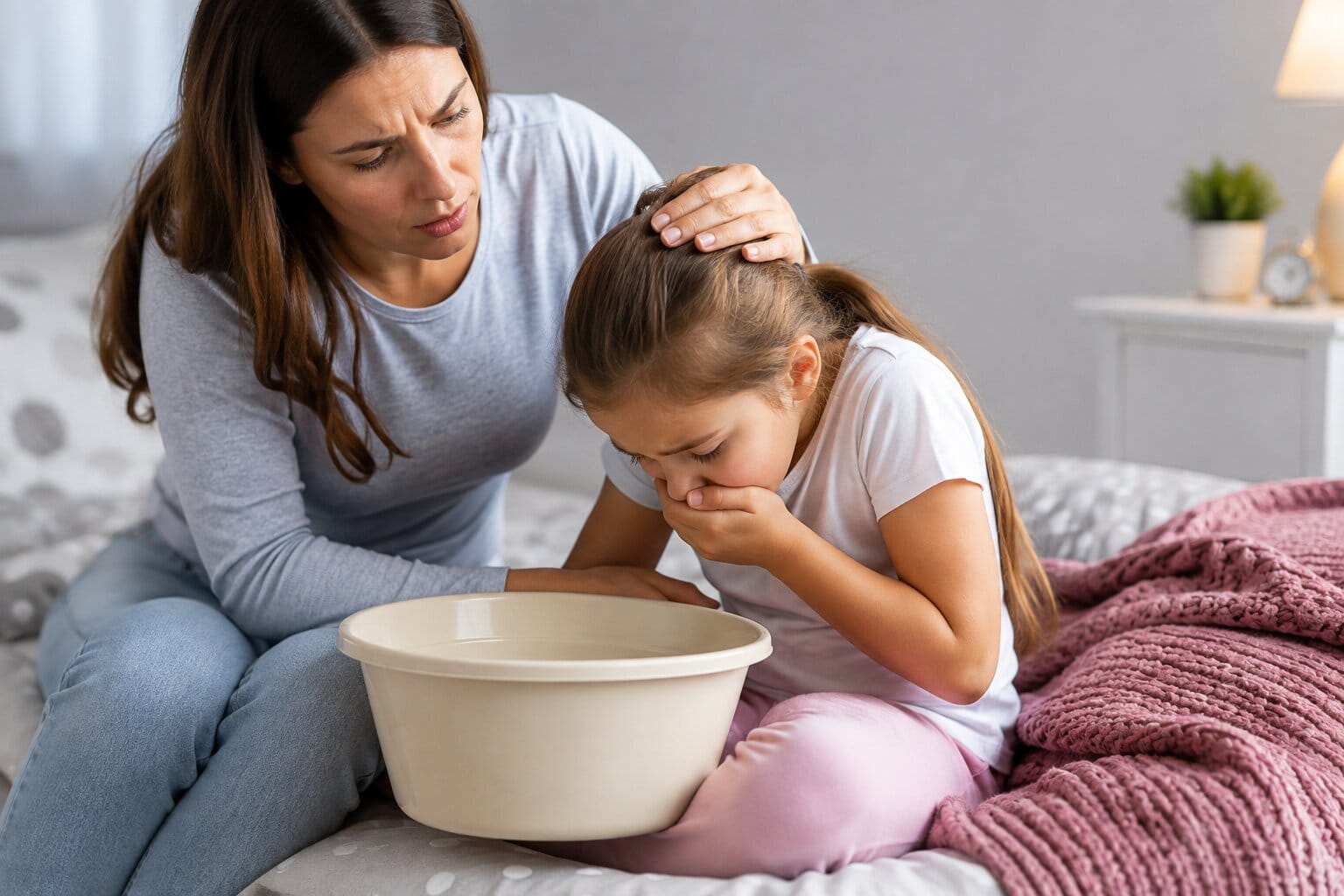
Most cases settle within a day, but if you’re ever unsure, an after-hours GP clinic can check your child when your usual doctor isn’t open. Vomiting in children is one of the most common reasons parents seek care, and it’s rarely a sign of anything serious. Still, knowing what’s normal and what’s not can save you a worried night and, occasionally, a trip to hospital.
Today, we will take you through the common causes, the child vomiting symptoms to watch for, and how to manage vomiting child treatment at home while your child recovers.
See a doctor if your child can’t keep fluids down for more than eight hours, shows signs of dehydration, has blood or green vomit, has severe stomach pain, or is vomiting alongside a high fever. These signs suggest the cause needs medical attention rather than home care alone.
For most other cases, an unsettled tummy clears up on its own within 24 to 48 hours. The trick is watching your child’s overall condition rather than just counting how many times they’ve been sick.
Understanding the cause helps you judge how worried to be. Here’s a quick reference table of the most common triggers.
| Cause | Typical Signs | Usual Duration |
| Viral gastroenteritis | Diarrhoea, low fever, tummy cramps | 1 to 3 days |
| Food poisoning | Sudden vomiting after eating, cramping | 12 to 48 hours |
| Ear infection | Ear pain, fever, irritability | Improves within days of treatment |
| Motion sickness | Vomiting during or after travel | Resolves once travel stops |
| Overfeeding (infants) | Spitting up after large feeds | Improves with smaller, frequent feeds |
| Coughing fits | Vomiting straight after a coughing spell | Linked to the underlying cough |
| Urinary tract infection | Fever, tummy pain, smelly urine | Improves with treatment |
| Appendicitis | Pain shifting to the lower right side | Needs urgent assessment |
Viral gastroenteritis is the most frequent culprit behind child gastro symptoms in Australia, particularly during the cooler months when bugs spread more easily through childcare centres and schools.
Dehydration is one of the more concerning child gastro symptoms to watch for, since it’s the biggest risk with ongoing vomiting and can develop quickly in babies and toddlers. Watch for these specific signs:
If you notice several of these vomiting symptoms together, it’s time to arrange a medical review rather than wait it out.
Short bouts of being sick are common and often clear up on their own. If it continues past 24 hours without improvement, or your child seems to be getting worse rather than better, book an appointment.
If every sip comes straight back up for more than eight hours, dehydration risk rises quickly, particularly in babies under 12 months.
Vomit that looks bloody, coffee-coloured, bright green, or unusually dark needs urgent assessment. Green vomit can point to a bowel blockage, which needs prompt treatment.
Ordinary tummy cramps often come and go with vomiting. Constant, severe pain, especially if it settles in one spot like the lower right side, needs same-day review.
A temperature above 39°C alongside vomiting, particularly in a baby under three months, warrants a same-day check. For more detail on this, it helps to start by understanding when a child’s fever needs medical attention.
Any vomiting following a bump or fall, especially if it happens more than once, needs medical review that day, even if your child seems otherwise fine.
Dry lips, sunken eyes, reduced wet nappies, or unusual drowsiness all point to dehydration that needs prompt treatment from a doctor, not just more fluids at home.
Go straight to emergency, or call an ambulance, if your child is limp, unresponsive, struggling to breathe, having a seizure, or showing a rash that doesn’t fade when you press on it. These are signs of a genuine emergency rather than routine child gastro symptoms.
It’s worth becoming familiar with recognising emergency warning signs in children and adults, so you can act quickly and confidently if something serious comes up.
Most children can be safely managed at home with the right approach. Try these steps:
Home care works well for the majority of children, but it pays to stay alert for changes. If you’re ever uncertain, it’s worth recognising common childhood illnesses that may become more serious, since a few can look mild at first before escalating.
A GP can quickly work out whether your child needs vomiting child treatment such as anti-nausea medicine, rehydration fluids, antibiotics for an underlying infection, or further tests.
They can also examine your child’s tummy, check for dehydration, and rule out anything more serious, giving you peace of mind rather than a long wait at a busy hospital emergency department.
If symptoms appear outside normal clinic hours, seeing a doctor sooner rather than later, particularly for babies, toddlers, and children with ongoing vomiting symptoms, means the cause gets picked up early and treated properly.
If vomiting in children continues for more than 24 hours without improvement, it’s time to see a doctor. Vomiting lasting longer than this, or getting worse, needs a proper check to rule out a cause beyond a simple stomach bug.
Early signs include a dry mouth, fewer wet nappies, noticeable thirst, and a coated tongue. As dehydration progresses, children may become unusually sleepy, have sunken eyes, or produce very little urine.
Yes, sleep helps your child recover, and you don’t need to wake them unnecessarily to check on them. Just make sure they’re breathing normally and easy to rouse if you do check.
Offer small, frequent sips of oral rehydration solution or water rather than large amounts at once. Avoid fizzy drinks, undiluted juice, milk, and sugary cordial until vomiting has settled.
Vomiting becomes an emergency if it’s paired with blood or green colour, severe pain, a head injury, unresponsiveness, or breathing difficulty. In these cases, head straight to the emergency department rather than waiting for a GP appointment.


